Caledonian country
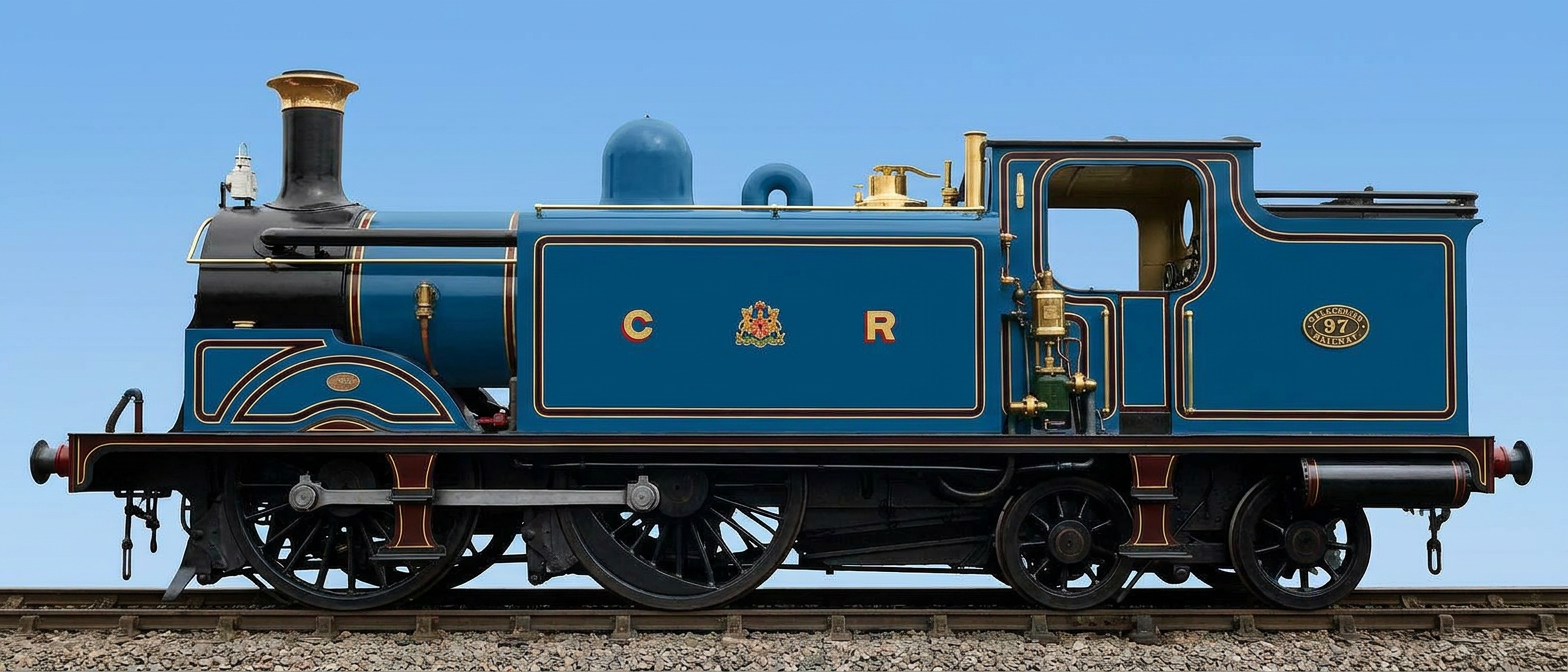
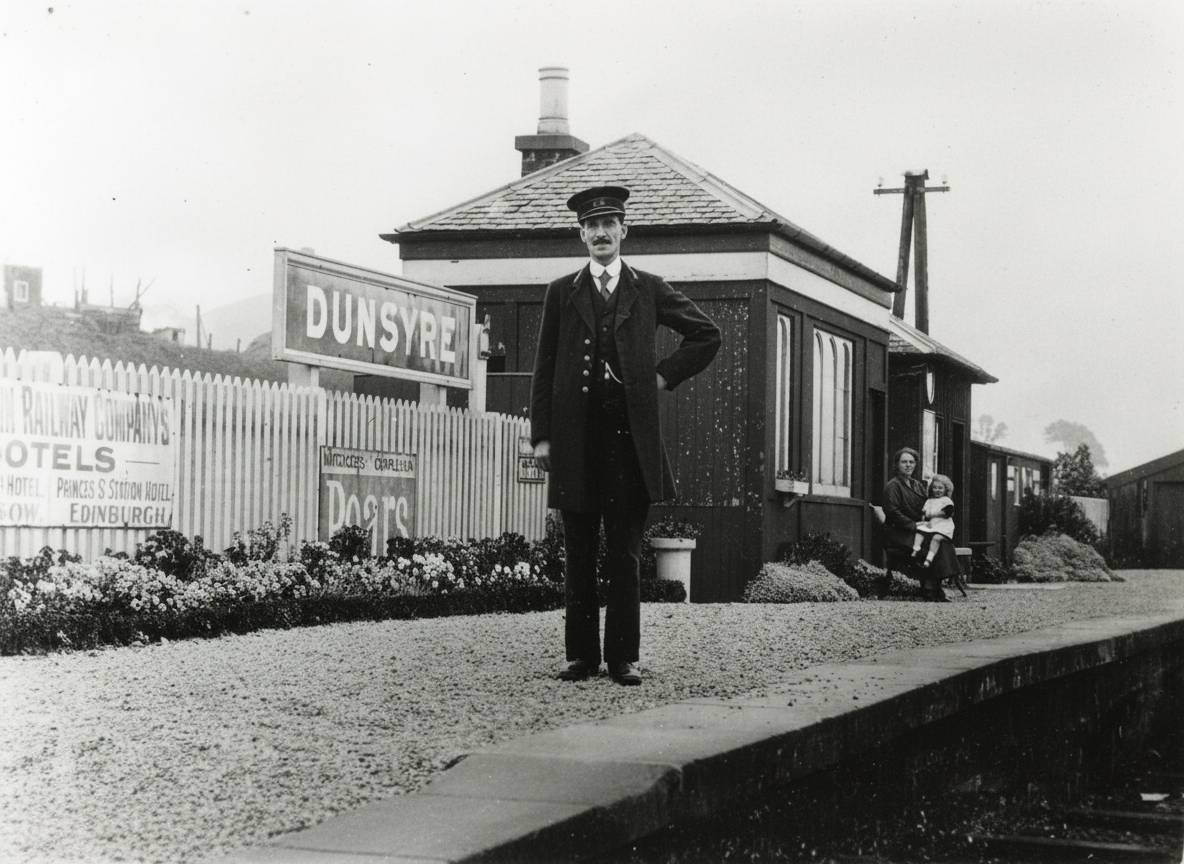
The railway reached Dunsyre in 1867, as part of a short branch line built by the Caledonian Railway to serve the upper Medwin valley and the village of Dolphinton on the Peeblesshire border. It was never a busy or particularly profitable line, but for nearly eighty years it connected a string of small farming communities to the wider rail network, and to Edinburgh and Glasgow beyond.
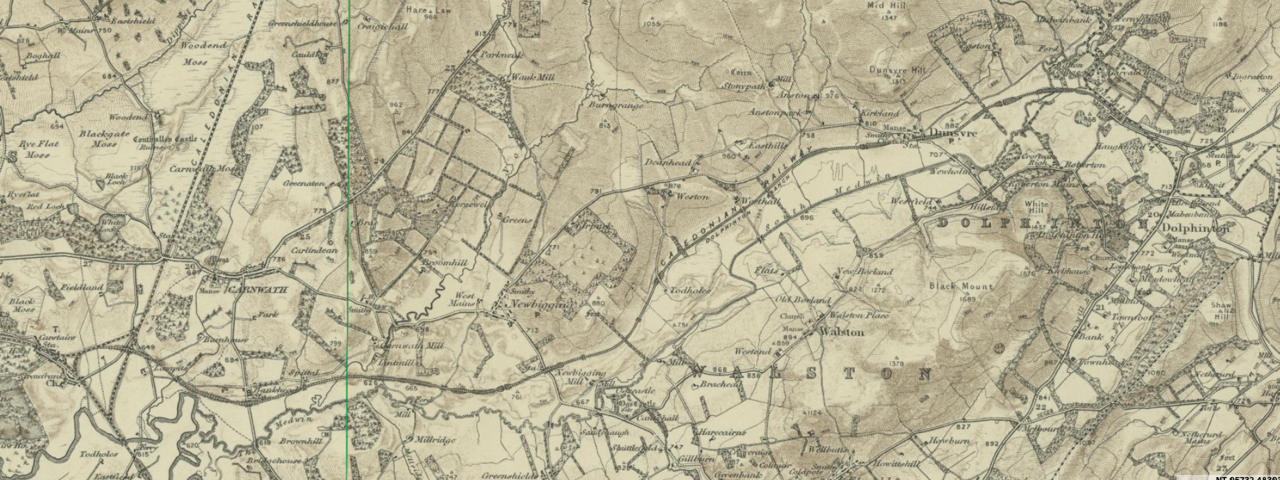
The Caledonian Railway, at the time one of Scotland's two great competing trunk lines, had its main Edinburgh–Glasgow route through Carstairs. The branch diverged from that main line at Dolphinton Junction, the apex of a triangle from Strawfrank Junction, where the Edinburgh line branches, and headed north-east into the hills. Its chief rival, the North British Railway, had its own ambitions for the same territory. The NBR ran a separate line into Dolphinton from the Peebles direction, which meant the small village ended up with two stations belonging to two different companies, with no physical connection between them. Passengers wishing to change between the two lines had to walk several hundred yards between stations.
Building the line
The Carstairs and Dolphinton Branch Railway Act received Parliamentary authorisation in 1863. Construction followed, and the line opened on 1 March 1867. It ran from Carstairs through the Medwin valley, calling at Dolphinton Junction, Bankhead, Newbigging, and Dunsyre before terminating at Dolphinton. Bankhead did not appear in timetables until November 1867, a few months after the line opened. The engineering was straightforward: the valley offered a gentle gradient with no major tunnelling or viaduct work, and the line remained a modest rural steam operation throughout its working life.
The stations
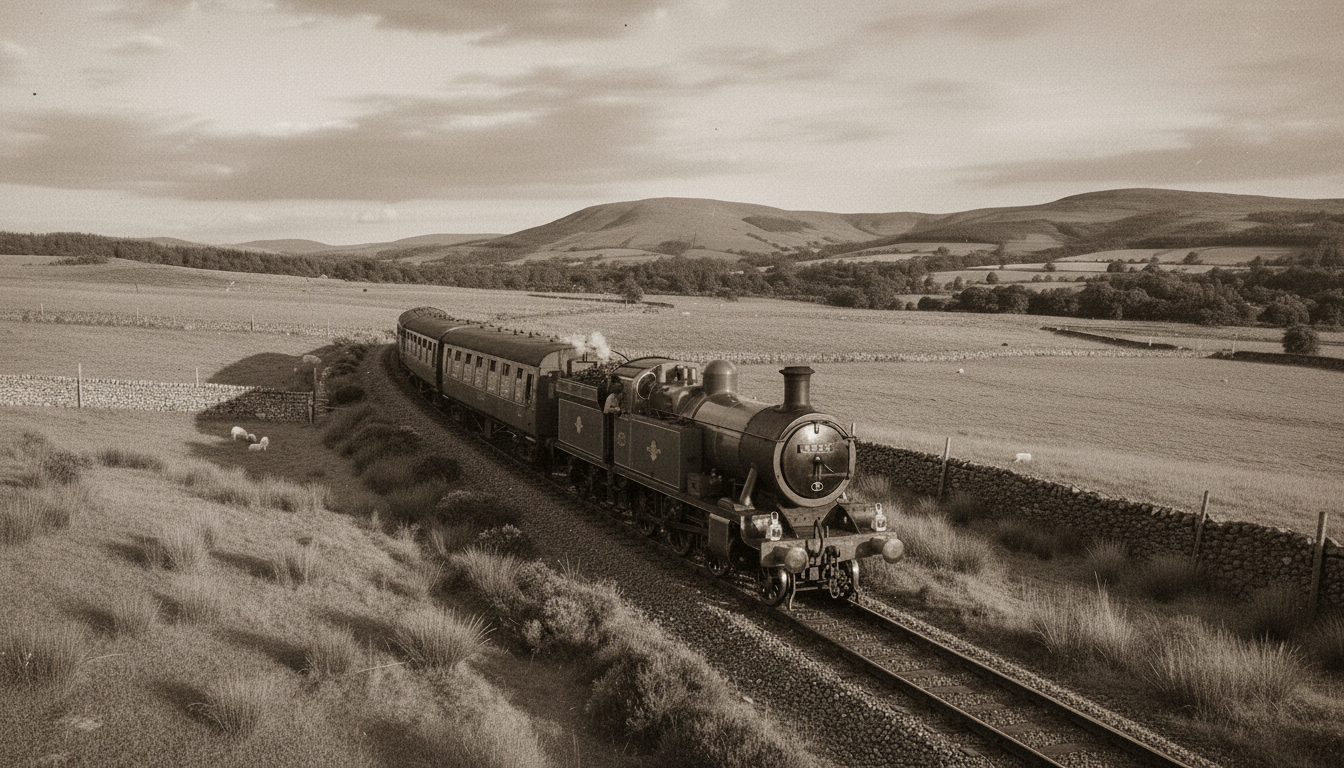
The branch served six locations in total, running north-east from Carstairs through the valley. Dunsyre station lay near the upper end of the route, between Newbigging and the terminus at Dolphinton.
| Location | Notes |
|---|---|
| Carstairs | Station on the Caledonian main line (Edinburgh–Glasgow). Starting point of the branch. |
| Dolphinton Junction | Apex of the triangle from Strawfrank Junction; divergence from the Edinburgh main line onto the branch. |
| Bankhead | First intermediate station; did not appear in timetables until November 1867. Served local farming traffic. |
| Newbigging | Small rural community in the lower Medwin valley. |
| Dunsyre | Served the village and surrounding farms; the closest railhead for the upper valley. |
| Dolphinton (Caledonian) | Terminus of the Caledonian branch. A separate NBR station served Dolphinton from the Peebles direction, with no rail connection between the two. |
Suspension and closure
The line struggled for traffic throughout the interwar period. Passenger numbers were modest and road competition was growing. Services were temporarily suspended on 12 September 1932, but reopened the following year on 17 July 1933. The respite was short-lived. The line closed to all traffic on 4 June 1945, before the end of the Second World War.
The trackbed was lifted and the land returned to agriculture. Little physical evidence of the line survives above ground at Dunsyre itself, though sections of the formation can still be traced across the valley floor. The stations are long gone.
The NBR at Dolphinton
The North British Railway's Dolphinton station was reached from the Peebles direction on a completely separate line. Two independent stations in one small village, built by competing companies with no connecting track: Victorian railway rivalry at its most impractical. Neither was ever particularly profitable, and the NBR's station also closed in due course. The village is now served only by road.