An ancient foundation
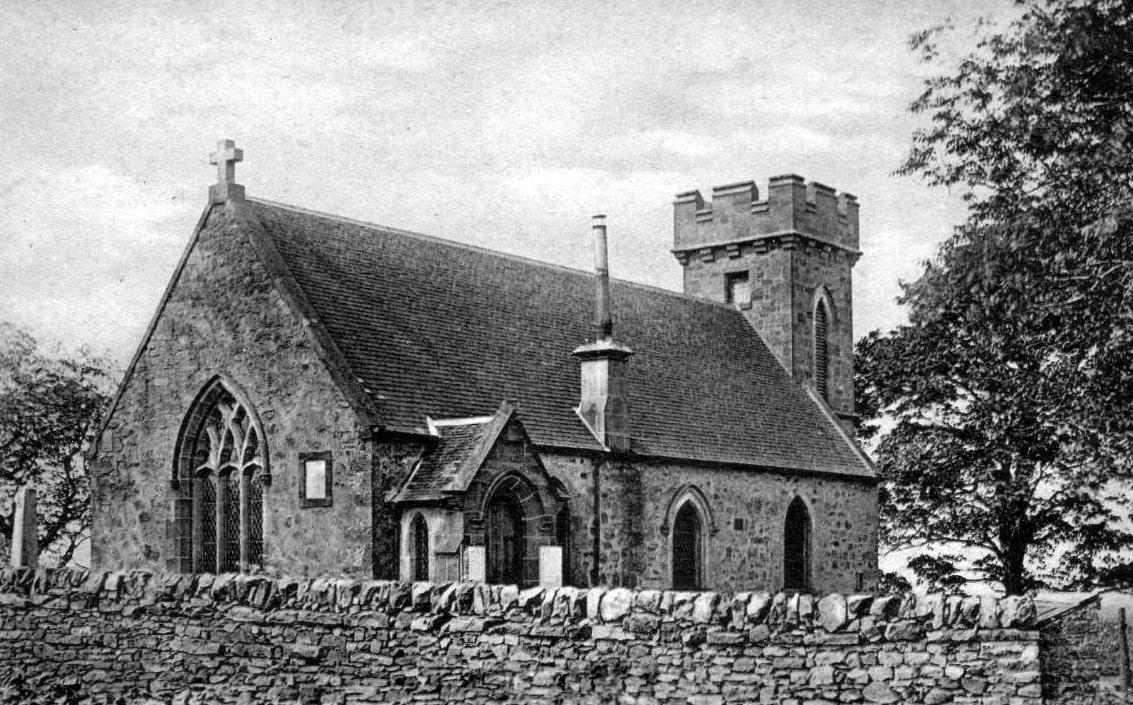
The Parish Church of Dunsyre stands on a tumulus (a natural mound) on the northern bank of the Medwin Water, and has been a place of Christian worship for many centuries. The date of the original foundation is not known, but the church's recorded history stretches back to the twelfth century, when it entered the possession of one of Scotland's most powerful monastic institutions.
The monks of Kelso
Between 1180 and 1199, the church was gifted to the Abbot and Convent of Kelso by Helias, brother to Jocelyne, Bishop of Glasgow. It remained a rectory of the monks of Kelso from the twelfth century until the Reformation, a period of some 350 years. The revenue the monks drew from the living was modest: until 1316 it amounted to no more than £5 6s 8d annually, rising to £20 at the Reformation.
The building
The building history of the church reflects the changes in the parish's fortunes over the centuries. At the Reformation it had been constructed in the barn style, using materials from an earlier Gothic building. By around 1750 it was still thatched with heath, receiving a slate roof for the first time at that date.
In 1820 it underwent a complete repair. A Gothic tower was erected at the east end, and on each side a lofty Gothic window was added. The building was seated to accommodate between 240 and 250 people, with the seats divided free of charge among the heritors' tenants and the village, an arrangement that reflected the broadly Presbyterian tradition of open, unallocated seating.
The churchyard contains some notable grave markers and inscriptions, including those connected to the Covenanting period.
Sources
New Statistical Account of Scotland (1845), Vol. VI, Lanark, Parish of Dunsyre. Available via the EDINA Statistical Accounts service.