Norman origins
The Lockharts are one of the oldest families in Lowland Scotland. Their ancestors, the Locards, arrived from Normandy in the aftermath of 1066, and made their way north to Scotland after being dispossessed of English lands by William the Conqueror. They settled across Lanarkshire, Dumfriesshire, and Peeblesshire. The lands of Lee, near Lanark, traditionally came into the family around 1272, and a charter of 1323 confirms Sir Symon Locard holding Lee and Cartland. They have held land in this part of Scotland for over 700 years without interruption.
Robert the Bruce and the crusade
Symon Locard, 2nd of Lee, fought alongside Robert the Bruce in the Wars of Scottish Independence and was knighted for his service. It is from this period that the family's most celebrated story comes. When Bruce died in 1329, Sir James Douglas led a group of Scottish knights, including Locard, to carry the king's embalmed heart to the Holy Land in fulfilment of Bruce's own crusading vow. Douglas was killed fighting the Moors in Spain, and command fell to Locard, who rescued the casket containing the heart and returned it to Scotland, where it was buried at Melrose Abbey.
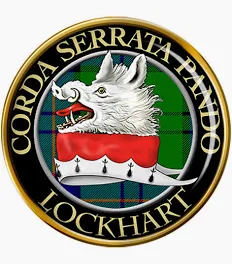
To mark the honour done to the family, the name was changed from Locard to Lockheart, later simplified to Lockhart. The clan motto, Corda Serrata Pando ("I open locked hearts"), is a pun on the name, and the family arms incorporate a heart within a fetterlock in direct reference to the crusade.
The Lee Penny
On the same crusade, Locard captured a Moorish nobleman in battle. As part of the ransom, the prisoner's mother offered a small dark red stone set in a silver coin, said to be a sovereign remedy against bleeding, fever, the bite of a mad dog, and sickness in cattle and horses. The stone, now known as the Lee Penny, was brought back to Lee Castle, where it remained for centuries. Its fame spread across Scotland and the north of England; during the reign of Charles I the citizens of Newcastle borrowed it to protect against the plague, pledging a substantial sum against its return.
The Lee Penny later inspired Sir Walter Scott's 1825 novel The Talisman. It remains in the possession of the Lockhart family.
Sir George Lockhart and the Carnwath estate
Sir George Lockhart (1630–1689) was the second son of Sir James Lockhart, Lord Lee, and became one of the most formidable advocates at the Edinburgh Bar. He rose to become Lord President of the Court of Session in 1685, effectively the head of the Scottish judiciary, and sat as MP for Lanarkshire in both the English and Scottish Parliaments. He acquired the Carnwath and Dryden estates in 1681, consolidating the Lockhart hold on a substantial swathe of South Lanarkshire.
His end was dramatic. On Easter Sunday 1689, he was shot dead on his way home from church in Edinburgh by a dissatisfied litigant named John Chiesly of Kersewell, who had been ordered by Lockhart to pay his estranged wife an alimony that Chiesly considered excessive. Lockhart had reportedly been warned that Chiesly was threatening him and had declined to take the threat seriously.
His son, George Lockhart of Carnwath (1673–1731), took a very different path. A passionate Jacobite, he became Principal Agent to the exiled King James following the rising of 1715 and was the only Commissioner who openly opposed the Act of Union in 1707. He was also among the earliest agricultural improvers in Lanarkshire. He died as the result of a duel.
Lee Castle and the estate today
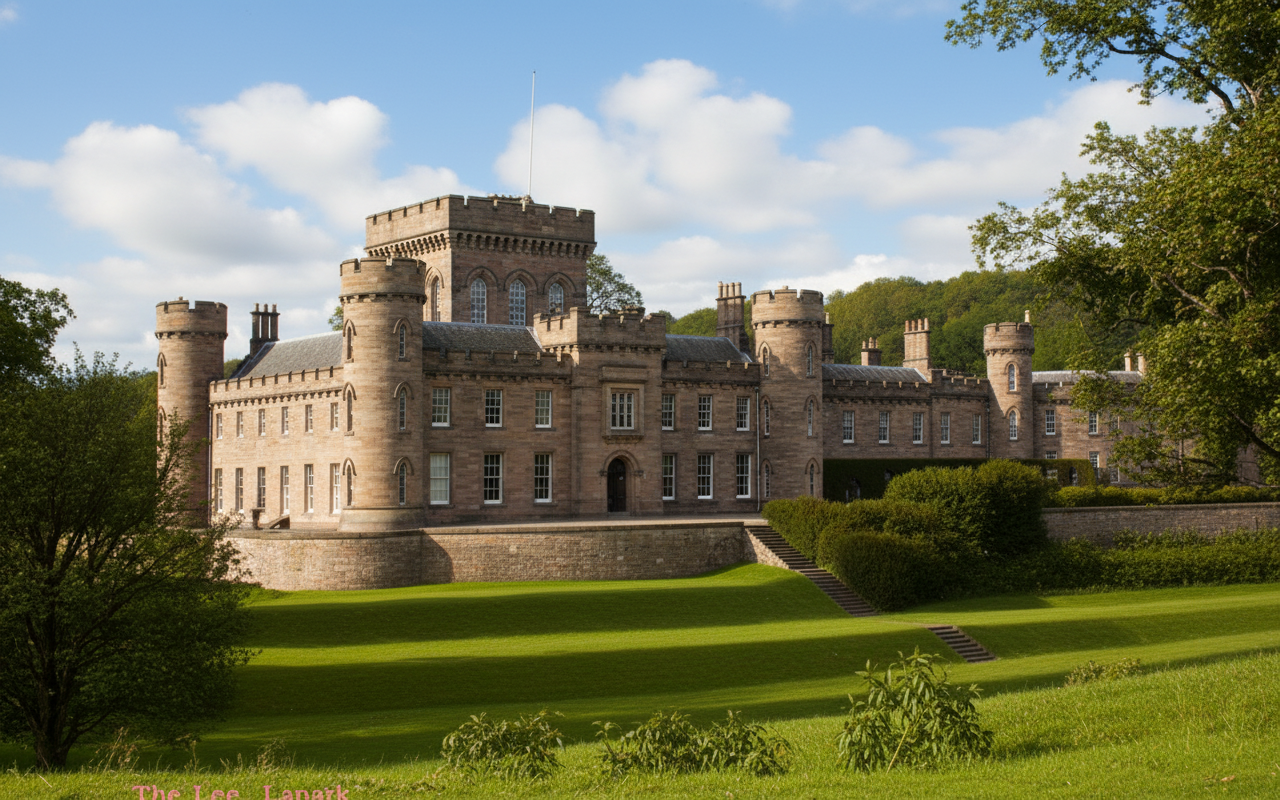
Lee Castle, the historic seat of the Lockharts, stands near Lanark. The present building dates largely from a substantial rebuilding commissioned in the 1830s and designed by the architect James Gillespie Graham, though the site has been associated with the family since the thirteenth century. The castle itself passed out of Lockhart ownership in the early twenty-first century, but the surrounding estate lands remain in family hands.
The current chief is Ranald Lockhart of the Lee, 27th of that name, Baron of Carnwath, Braidwood, Walston, Dryden, Covington, Milntown, Westshield and Newholm, a list of baronies that reflects the scale of the family's historic landholding across South Lanarkshire. Much of the land around Dunsyre and Carnwath continues to be managed through Lee and Carnwath Estates, making the Lockharts one of the longest continuously present landowners in the area.