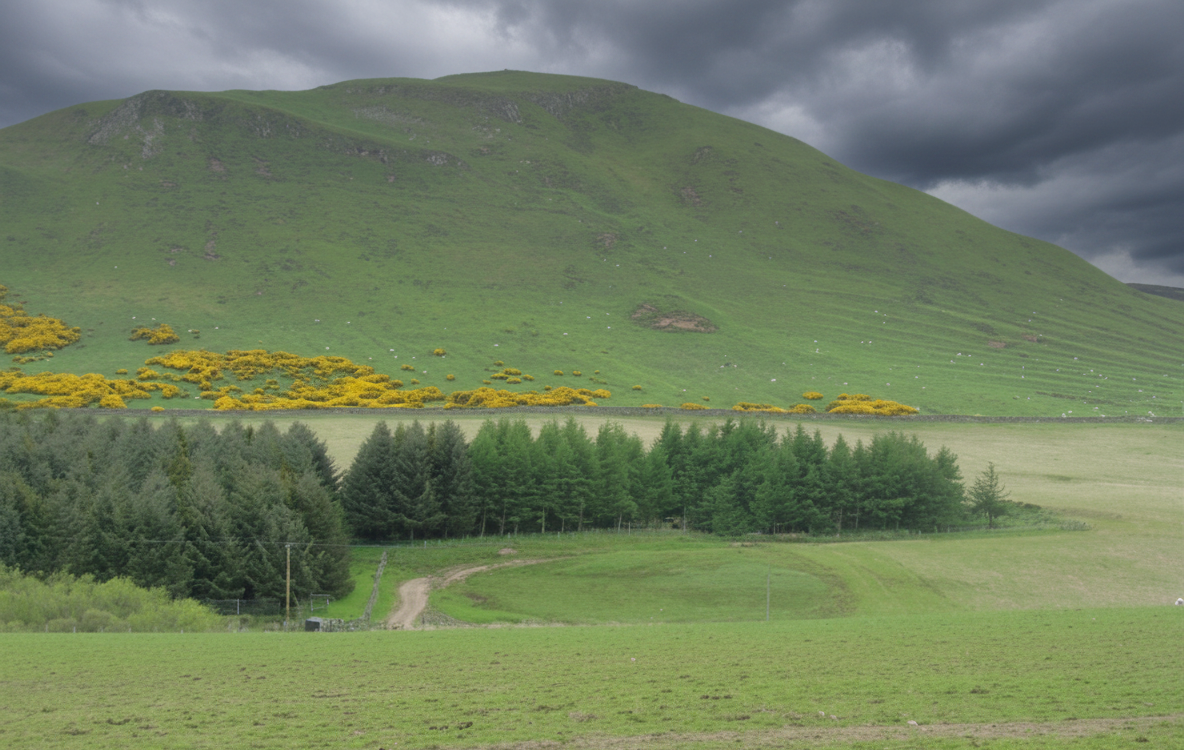
The name
Dunsyre is a name of Celtic origin, generally taken to mean "Hill of the Seer," from dun, a hill, and seer or sier, a prophet. Whether that refers to a particular individual, a tradition of prophecy associated with the hill, or something that has simply been lost to time, no one can now say with certainty. It first appears in written records in the twelfth century, though the settlement itself is considerably older.
The Rev. William Meek, writing the New Statistical Account of Scotland for the parish in 1834, notes a detail that doesn't appear in later sources: "the place seems to have been originally the site of a Druidical temple." Whether this refers to a physical structure, a remembered tradition, or an inference from the landscape, he doesn't elaborate. The Druidical association with high ground and prominent hills was common across Celtic Scotland, and Dunsyre Hill, visible from a considerable distance across the valley, would have been a natural focus for such a tradition.
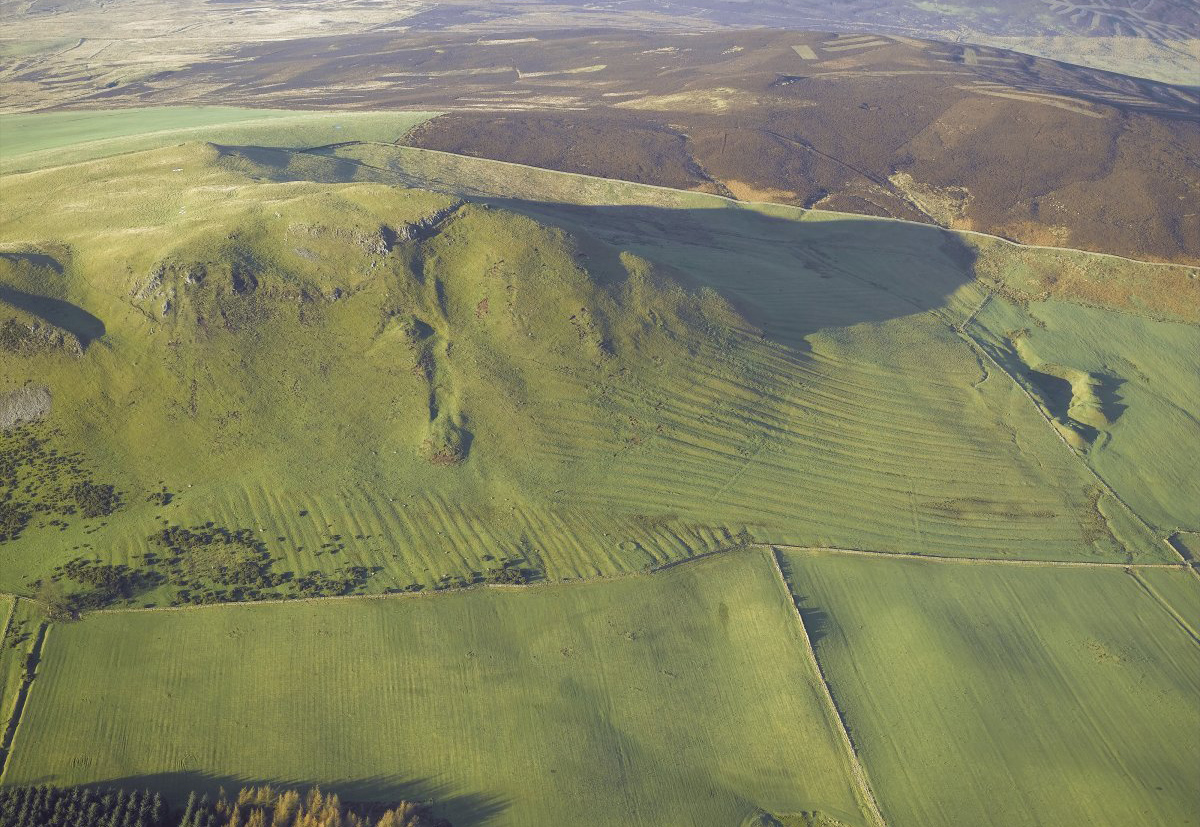
The cultivation terraces
The hillside above the village carries visible evidence of long human occupation. Dunsyre Hill displays cultivation terraces, earthwork steps cut into the slope to create level ground for farming, and are among the earliest physical evidence of settlement in the area. These features are not the work of a single period: they span from prehistoric times through to the medieval period, representing repeated agricultural use of the hill over thousands of years.
Terracing of this kind required sustained effort and suggests a settled, organised community: people who expected to remain and to work the same ground across generations. The terraces are still clearly visible on the hillside, a quiet persistence of human presence in a landscape that otherwise gives little away about its past.