"In the troubled times of the persecution, Dunsyre often afforded a retreat to the Covenanters."
The National Covenant
The Covenanting movement grew out of Scotland's fierce resistance to the religious policies of Charles I. In 1638, thousands of Scots signed the National Covenant, pledging to defend Presbyterianism against what they saw as the king's attempts to impose episcopacy (rule by bishops) on the Church of Scotland. The Solemn League and Covenant followed in 1643, extending the commitment to England and Ireland as well.
When Charles II was restored to the throne in 1660, the bishops were reinstated and the Covenants effectively outlawed. Ministers who refused to conform, some 400 of them across Scotland, were ejected from their parishes. Many continued to preach in secret, gathering their congregations on remote hillsides and moorland in what became known as conventicles. Attendance at a conventicle was a serious offence; preaching at one was punishable by death.
Dunsyre as a refuge
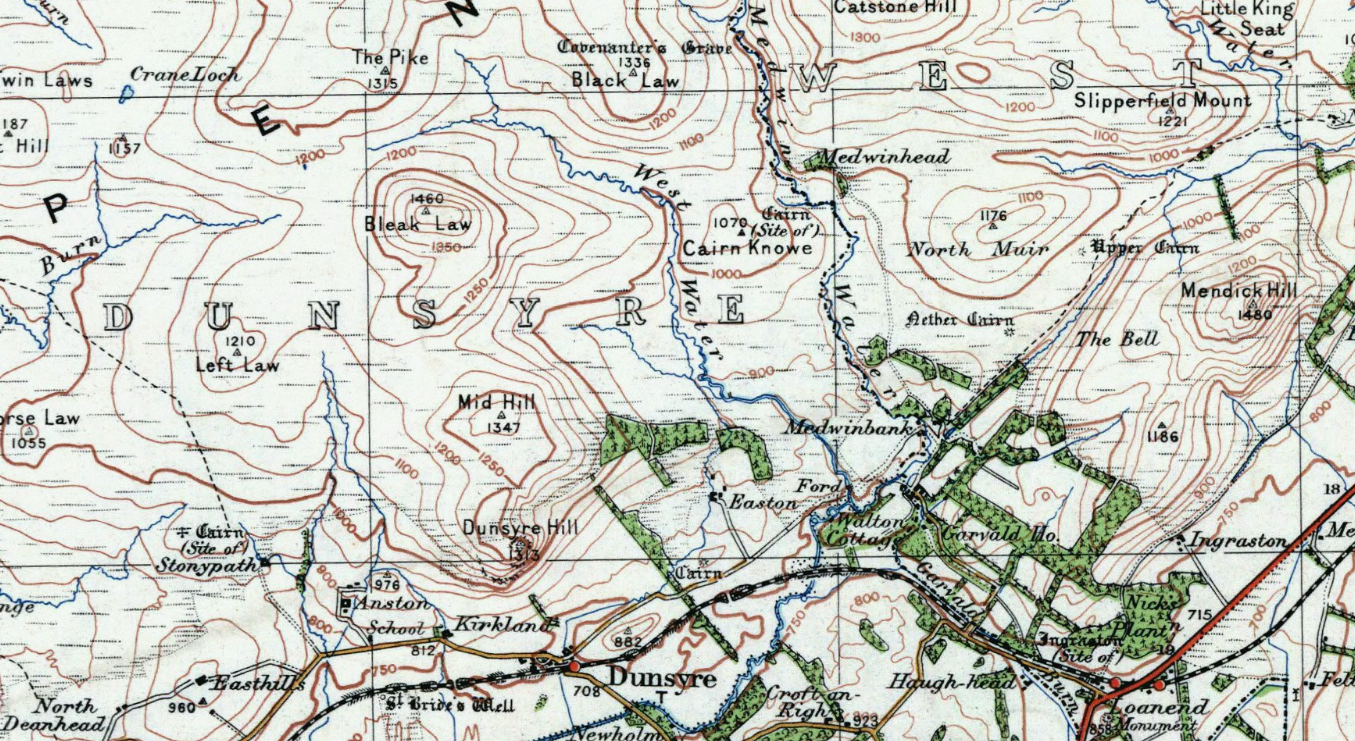
The Lanarkshire uplands, including the hills and moorland around Dunsyre, were well suited to clandestine worship. The terrain offered cover, the population was largely sympathetic, and the distance from the garrison towns made government troops slower to respond. Field conventicles were held in the area, and the parish became a refuge for ministers moving between preaching sites.
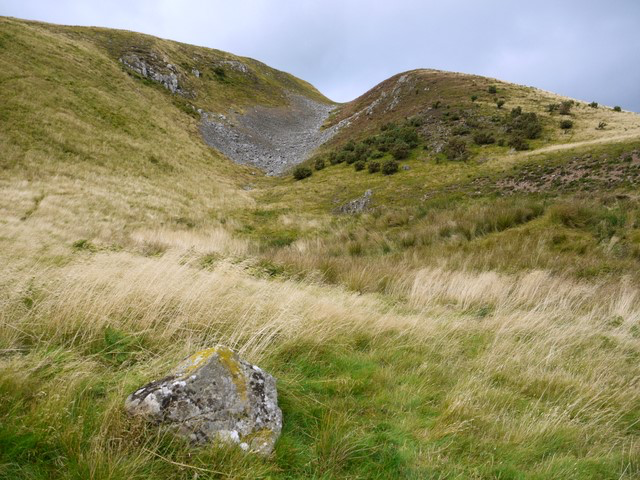
On the parish boundary with Lothian and Tweeddale there is a deep ravine, in the centre of which there is a large collection of stones. This rugged spot bears the name of Roger's Kirke, almost certainly named after a Covenanting minister who used it as a place of worship. Several other places in the moors still bore the name of "preaching holes" as late as 1834: natural retreats into which the ministers withdrew while their congregations dispersed at the approach of dragoons.
William Veitch and Marion Fairlie
William Veitch farmed land at Westhills of Dunsyre with his wife Marion Fairlie, whom he had married in Lanark in November 1664. Marion came from the ancient family of the Fairlies of the house of Braid, near Edinburgh, and was related through her father to Lord Lee's first lady, a connection that placed the Veitches within the same web of families as the Lockharts of Lee. Both were people of strong Presbyterian conviction, and both would spend the next two decades paying heavily for it.
In 1666, Veitch was persuaded by Mr. John Welsh, minister of Irongray, and others who came to his house at Westhills to join the party of Covenanters who had risen against Sir James Turner, a government commander notorious for the brutal treatment of the local population. The rising ended in defeat at the Battle of Pentland Hills on 28 November 1666.
On the night of the defeat, Marion was at Westhills, sheltering several of the officers who had fled to her house for refuge, and weeping because she could not learn whether her husband was among the dead. Veitch had escaped from the battlefield and made his way to a herdsman's house on Dunsyre Common, within a mile of his own home. He left his horse with the herdsman and asked him to carry word to Marion that he was alive. He lurked in the area for several nights, then made his way to England.
Two days after the battle, a party of Dalziel's troopers arrived at Westhills to search for him. They did not find him. What followed were years of harassment: soldiers arriving in the night, ordering Marion out of bed, surrounding the house to prevent escape through the windows, searching every room. They came most often after dark, judging there was more chance of finding him home. A neighbouring laird and his wife offered to inform on Veitch if he returned. Despite all of it, the troopers never caught him.
The family's connection to Dunsyre goes beyond the farm. Their first child, Mary, was born at Westhills on 23 September 1665. She died in infancy in March 1666 and was buried at Dunsyre kirk. Their second child, William, was also born at Westhills, on 2 April 1667. Eventually, on Veitch's advice, Marion gave up the farm and moved with the children to Edinburgh, where they lived in comparative quiet for several years. Veitch himself came south from Newcastle to advise her, at considerable personal risk, before returning to England.
The account of these years survives largely through Marion's own diary and through Veitch's memoirs, both preserved in a record drawn up as part of a collection called Ladies of the Covenant. It is one of the most detailed personal accounts of the Covenanting persecution from the perspective of those who lived through it in this part of Lanarkshire.
After the Revolution of 1688 Veitch became minister first of Peebles, then of Dumfries. He and Marion died in May 1722 within a day of each other, after fifty-eight years of marriage, and were buried together in the old church of Dumfries.
Donald Cargill and his last sermon
The most significant Covenanting connection Dunsyre holds is with Donald Cargill (c.1619–1681), one of the most committed and radical of the field preachers. Cargill had been ejected from his Edinburgh parish in 1662 and had preached at conventicles across the Lowlands for nearly two decades, constantly evading capture.
In September 1680 Cargill went further than any other Covenanting minister dared, pronouncing a formal sentence of excommunication at the Torwood near Stirling against Charles II, the Duke of York, the Duke of Monmouth, and several of the king's most prominent ministers. It was an extraordinary act of defiance, essentially declaring the king beyond the bounds of the Christian community, and it made Cargill the most wanted man in Scotland.
On Sunday 10 July 1681, Cargill preached what proved to be his final sermon on Dunsyre Common. Just two days later, on the night of 12 July, he was captured at Covington Mill in Lanarkshire, going there, the Statistical Account notes, "contrary to the advice of his friends." He was taken to Edinburgh, tried, and hanged at the Mercat Cross on 27 July 1681. He was treated in the most ignominious manner: led through the streets of Lanark with his back turned to the horse's head, his feet tied below its belly. His head was struck off and displayed on the Netherbow Port.
The fact that his last free act of ministry took place on Dunsyre Common has given the village a lasting place in Scottish Presbyterian memory.
 Watch: The Story of Donald Cargill — Covenanter
Symbols of the cause
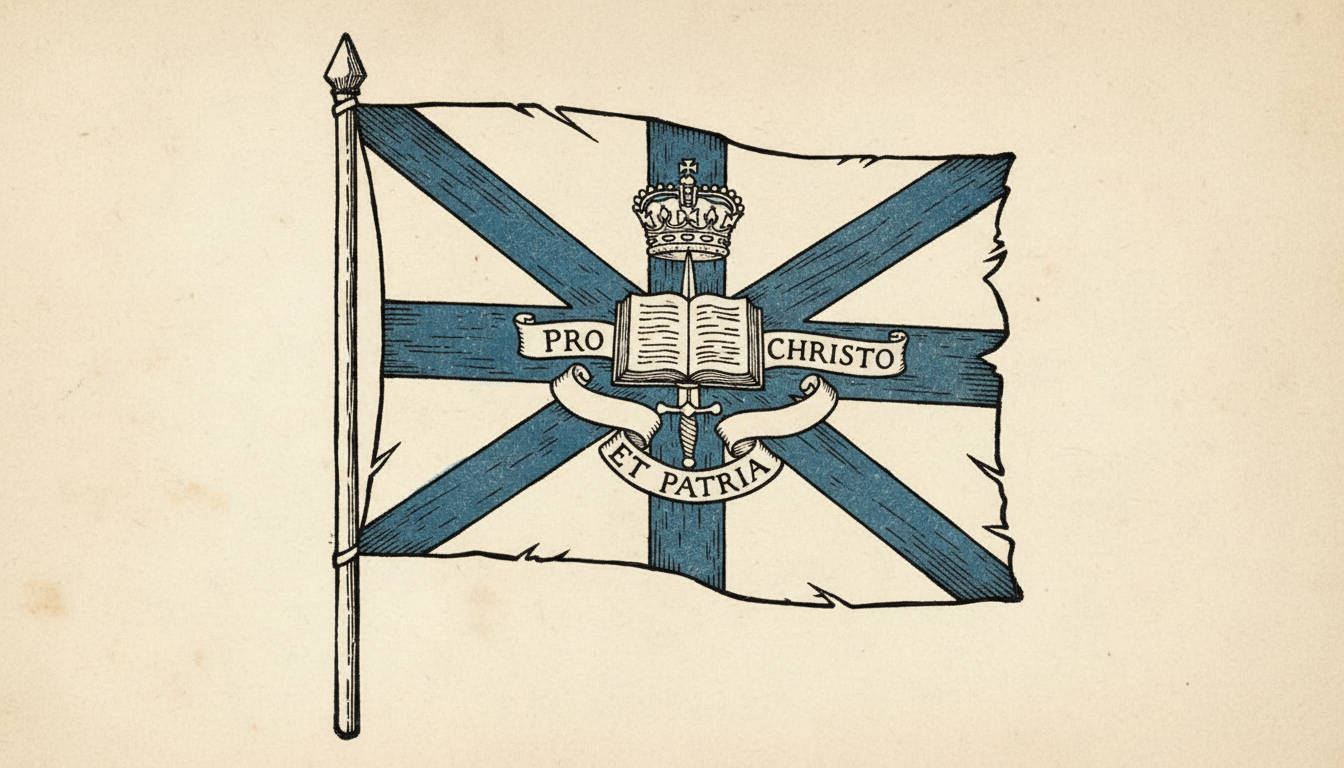
The Covenanters had no single common flag or standard. Different congregations, field armies, and regional groupings used a variety of emblems to identify themselves and their cause: banners bearing biblical texts, the blue saltire, or phrases drawn from the Covenants themselves. Some carried the words For Christ's Crown and Covenant, which became the most enduring rallying cry of the movement. Others displayed the Scottish thistle or simple hand-sewn banners with scripture references. The diversity of these emblems reflects the decentralised nature of the Covenanting movement itself, bound by shared conviction rather than a single chain of command.
Sources
Donald Cargill, Wikipedia
Covenanters, Wikipedia
Cargill's excommunication of Charles II, Jardine's Book of Martyrs
New Statistical Account of Scotland (1845), Vol. VI, Parish of Dunsyre